
MAE 298 Seminar: Data Science Tools for Studying Laser-Induced Ignition in a Rocket Combustor
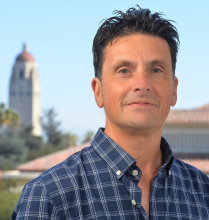
Joseph L. and Roberta M. Rodgers Professor
Mechanical Engineering Department
Stanford University
Abstract: Laser-induced ignition is envisioned as a lightweight and effective technology for second-stage boosters and low-orbit maneuvers. One of the critical design challenges is to ensure reliability while minimizing fuel waste and overpressure. The presence of variability in the propellant mixture at the time of the laser firing, the imprecision present in the laser targeting and other potential differences between the design scenarios and the real-world operations make the process highly stochastic. In a large project at Stanford, we have developed high-fidelity simulation tools to faithfully represent the high-speed turbulent propellant dynamics, the laser energy deposition and the combustion dynamics of reactive mixture. The computations, together with a companion experimental campaign form the basis of several data-science activities. We will summarize how we have used the datasets to: (1) build data-driven surrogates to study ignition reliability, (2) perform validation in latent spaces to compare 100s of experimental and computational realizations, (3) carry out uncertainty quantification and attribution studies using multifidelity ensembles, (4) develop machine learning tools to enhance experimental diagnostics.
Bio: Gianluca Iaccarino is the Robert Bosch Chair and Professor of the Mechanical Engineering Department at Stanford University. He received his doctorate from the Politecnico di Bari (Italy) in 2005, and joined the faculty at Stanford in 2007. Since 2014, he has been director of the PSAAP Center at Stanford, funded by the U.S. Department of Energy focused on multiphysics simulations, uncertainty quantification, data science and exascale computing. He received the U.S. ACM Thomas Hughes Medal, Presidential Early Career Award for Scientists and Engineers (PECASE) award and is a fellow of APS and senior fellow of AIAA.
Share

Upcoming Events
-
CBE 298 Seminar: Coffee as a Platform for Experiential Chemical Engineering Education: From Qualitative Design to Quantitative Analysis
-
EECS Seminar: Printed Electronic Skin for Robots and Interactive Systems
-
MSE 298 Seminar: Illuminating Microstructure-Dependent Binding and Delivery of Nucleic Acids via Gradient Copolymerization and Field Flow Fractionation
-
MSE 298 Seminar: Illuminating Microstructure-Dependent Binding and Delivery of Nucleic Acids via Gradient Copolymerization and Field Flow Fractionation