
CBE Special Seminar: Operando Electrochemical Methods at Dynamic Energy Materials Interfaces
Abstract: One of the grand challenges of energy materials is identifying the active sites and capturing real-time “movies” of catalytic processes, i.e., watching catalysis in action.[1] It is increasingly evident that pristine and post-mortem electrocatalysts, characterized ex situ, most likely do not maintain the same active structures under electrochemical conditions. The need to establish structure-(re)activity correlations in electrocatalysis motivates the development of operando (operating) methods. The molecular and structural pictures of electrocatalysts have a delicate interplay in which catalysts are designed to effectively turn over molecules into desirable products, while molecules often drive the dynamic catalyst evolution.
I will first present our recent progress in probing dynamic structural evolution of energy materials by developing multimodal operando electrochemical liquid-cell scanning transmission electron microscopy (EC-STEM) and synchrotron-based high-energy-resolution X-ray spectroscopy to across multiple spatiotemporal scales.[1-2] Operando electrochemical 4D-STEM in liquid, assisted by machine learning, has shown great potential to interrogate complex structures of active sites of energy materials at solid-liquid interfaces. My group recently employed operando electrochemical 4D-STEM to provide direct nanoscale movies visualizing evolution from single-atom catalysts to active Cu nanostructures for CO2 reduction to liquid fuels.[3] I will then introduce our instrument development on the first-of-its-kind operando heating and cooling EC-STEM to diagnose battery failure mechanisms below freezing temperatures and catalyst degradation mechanisms at elevated temperatures.[4]
I will then present our research on fundamental single-crystal electrochemistry to elucidate molecular pictures of proton-coupled electron transfer mechanisms. I will highlight high-quality single-crystal electrodes and ultrapure heavy water are necessary to enable reliable kinetic isotope effect (KIE) measurements. We report, for the first time, inverse KIEs in which Pt single crystals exhibit significantly higher ORR activity in D2O than in H2O.[5] Such counterintuitive inverse KIEs are closely correlated to the lower *OD coverage and weakened *OD binding strength, relative to *OH. I will also discuss the strong facet- and potential-dependent KIEs for alkaline HER at Pt single-crystal surfaces and cation-dependent phosphate adsorption at Au single-crystal surfaces (Unpublished). 1.Yang, Nature 2023, 614, 262; 2.Yang, Nature Catalysis 2025, 8, 579; 3. Choi, Yang*, J. Am. Chem. Soc. 2025, 147, 37808; 4. Kim, Yang*. J. Am. Chem. Soc. 2025, 147, 23654; 5. Yang, Nature Chemistry 2023, 15, 271
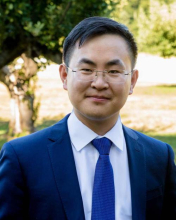
Bio: Yao Yang received his bachelor's degree at Wuhan University in 2015 and doctorate at Cornell University in 2021. He was co-advised by Héctor Abruña in electrochemistry and David Muller in electron microscopy, and worked extensively with Francis DiSalvo on solid-state materials. As a Miller fellow at UC Berkeley, he worked with Peidong Yang on developing operando STEM for investigating the dynamic evolution of CO2 Reduction nanocatalysts. He joined Cornell's chemistry faculty as an assistant professor in 2024 and is the graduate field faculty in both the Department of Materials Science and Engineering and Department of Chemical and Biomolecular Engineering at Cornell University.
He was recognized by ACS AC/DC Rising Stars in Analytical Chemistry (2022) and ACS Materials and Interfaces Outstanding Presentations by Young Investigators Award (2025). He was recently awarded the Journal of Materials Research Distinguished Invited Speaker by the Materials Research Society. He served as the GRS chair for the Gordon Liquid-Phase TEM conference. He serves as the co-chair for the only electrochemistry symposium at ACS Division of Analytical Chemistry, Advances in Electrochemistry.
Share

Related Content
| Attachment | Size |
|---|---|
| 987.31 KB |
Upcoming Events
-
CBE 298 Seminar: Coffee as a Platform for Experiential Chemical Engineering Education: From Qualitative Design to Quantitative Analysis
-
EECS Seminar: Printed Electronic Skin for Robots and Interactive Systems
-
MSE 298 Seminar: Illuminating Microstructure-Dependent Binding and Delivery of Nucleic Acids via Gradient Copolymerization and Field Flow Fractionation
-
MSE 298 Seminar: Illuminating Microstructure-Dependent Binding and Delivery of Nucleic Acids via Gradient Copolymerization and Field Flow Fractionation