
Q&A with Alumnus Tiantian Yang ‘15
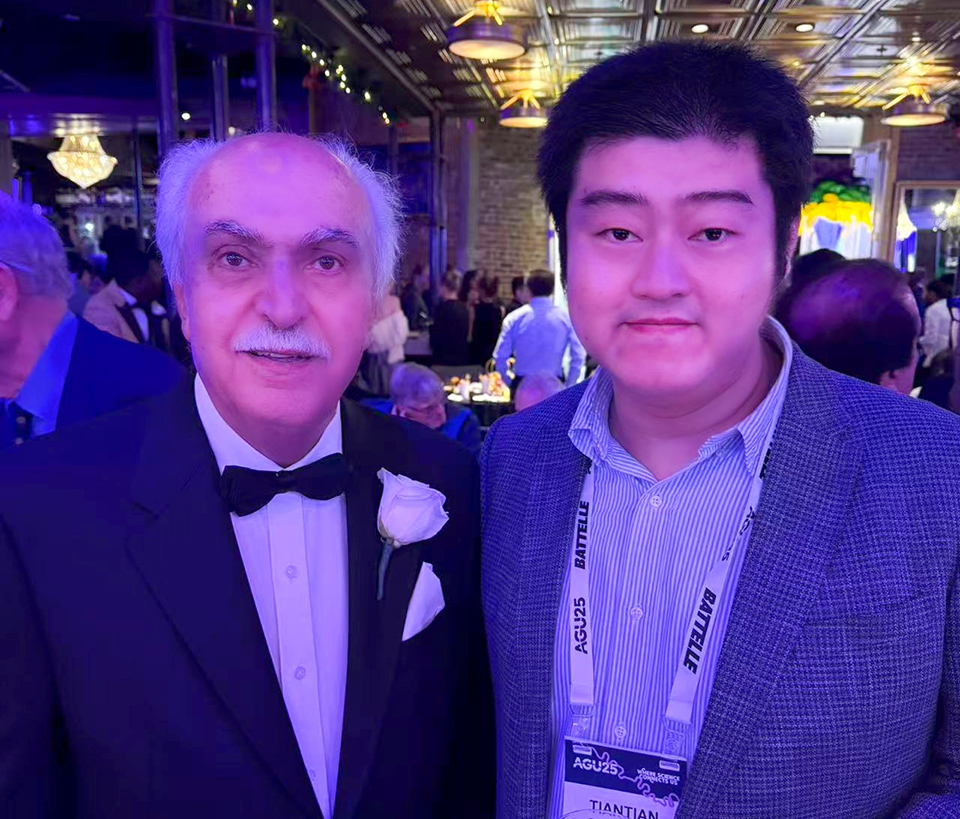
Jan. 13, 2026 - UC Irvine engineering alumnus Tiantian Yang, M.S. 2011, Ph.D. 2015, has been recognized with the Hydrologic Sciences Early Career Award from the American Geophysical Union (AGU). The award honors early career scientists who have made outstanding contributions to the hydrologic sciences, education or societal impacts and show promise of contributions to hydrology.
Yang earned his master’s in mechanical and aerospace engineering in 2011 and his doctorate in civil and environmental engineering in 2015 at UCI, and he credits the Center for Hydrometeorology and Remote Sensing (CHRS) and its multidisciplinary environment as the foundation for his research successes today. He has served on the faculty at University of Oklahoma as engineering and environmental science associate professor for seven years and recently accepted a position as associate professor in the School for Environment and Sustainability at the University of Michigan at Ann Arbor, starting in January 2026.
When did you realize you were interested in engineering?
I have wanted to be an engineer since high school when I became fascinated by how complex natural and human systems shape people’s lives. I grew up in Beijing, China, where more than 30 million people in the Beijing–Tianjin metropolitan region have long struggled with severe water shortages. When China launched the massive south-to-north Water Transfer Project, I was captivated by how engineering solutions could influence the water sustainability of the entire nation.
Years later when I came to UCI, I learned that California faces a strikingly similar challenge through the State Water Project, which transfers water from northern California to Southern California. That parallel between two places I cared deeply about sparked my academic interest in hydrology and water resources.
This connection led me to UCI, where I was mentored by Distinguished Professor Soroosh Sorooshian. Under his guidance, I pursued my Ph.D. research on reservoir and hydropower system operations under climate variability and extreme weather. Those early experiences of seeing water scarcity firsthand across continents and observing large-scale engineering interventions allowed me to develop water decision making tools that help society prepare for climate extremes.
Why did you choose UCI for your graduate degrees?
UCI offered the ideal combination of academic excellence, interdisciplinary freedom and a collaborative research culture.
The core courses offered were intentionally designed to be widely applicable across engineering disciplines. This flexibility allowed me to pursue hydrology and water resources research while drawing on tools from mechanical engineering, climate science and computational modeling. UCI gave me both the academic rigor and the intellectual freedom I needed, and it remains one of the most influential decisions of my career.
What was it like coming from China’s higher educational system to UCI?
It was both exciting and transformative. Tsinghua offered an exceptionally strong and rigorous engineering foundation, but its academic structure is more linear and specialized. Once you commit to a specific engineering major, transitioning into another field can be difficult.
At UCI, I immediately felt the difference. The campus environment was vibrant, open and interdisciplinary. The Samueli School of Engineering embraces cross disciplinary research as a defining principle. Students are encouraged to explore new areas, take courses across departments and collaborate widely with peers.
In fact, this openness made it possible for me to complete my master’s in mechanical and aerospace engineering and then shift to a Ph.D. in civil and environmental engineering. If I had stayed in a more rigid academic structure, such a transition would have been extremely challenging. UCI helped me discover the research direction I was most passionate about, and that experience continues to shape the way I mentor my own students today.
Any favorite memories from your time at UCI?
Some of my favorite memories include long research discussions with Professor Sorooshian, collaborative brainstorming sessions with colleagues at the CHRS and presenting my early work at the (AGU) conferences. I also remember late nights coding in the lab, the excitement of seeing model results finally make sense and simply enjoying the beautiful Irvine campus. UCI provided an environment where I could grow both intellectually and personally, and the mentorship and friendships I gained there have stayed with me throughout my career.
I also have many small, nostalgic memories that still make me smile. I still keep my old Java City coffee punch card, the kind where you’d earn a free drink after collecting 10 stamps. I’m not sure if the program still exists — but a part of me hopes that one day, if I walk in with my half-filled punch card, Java City might still honor it.
Tell us more about your time with UCI’s Center for Hydrometeorology and Remote Sensing (CHRS).
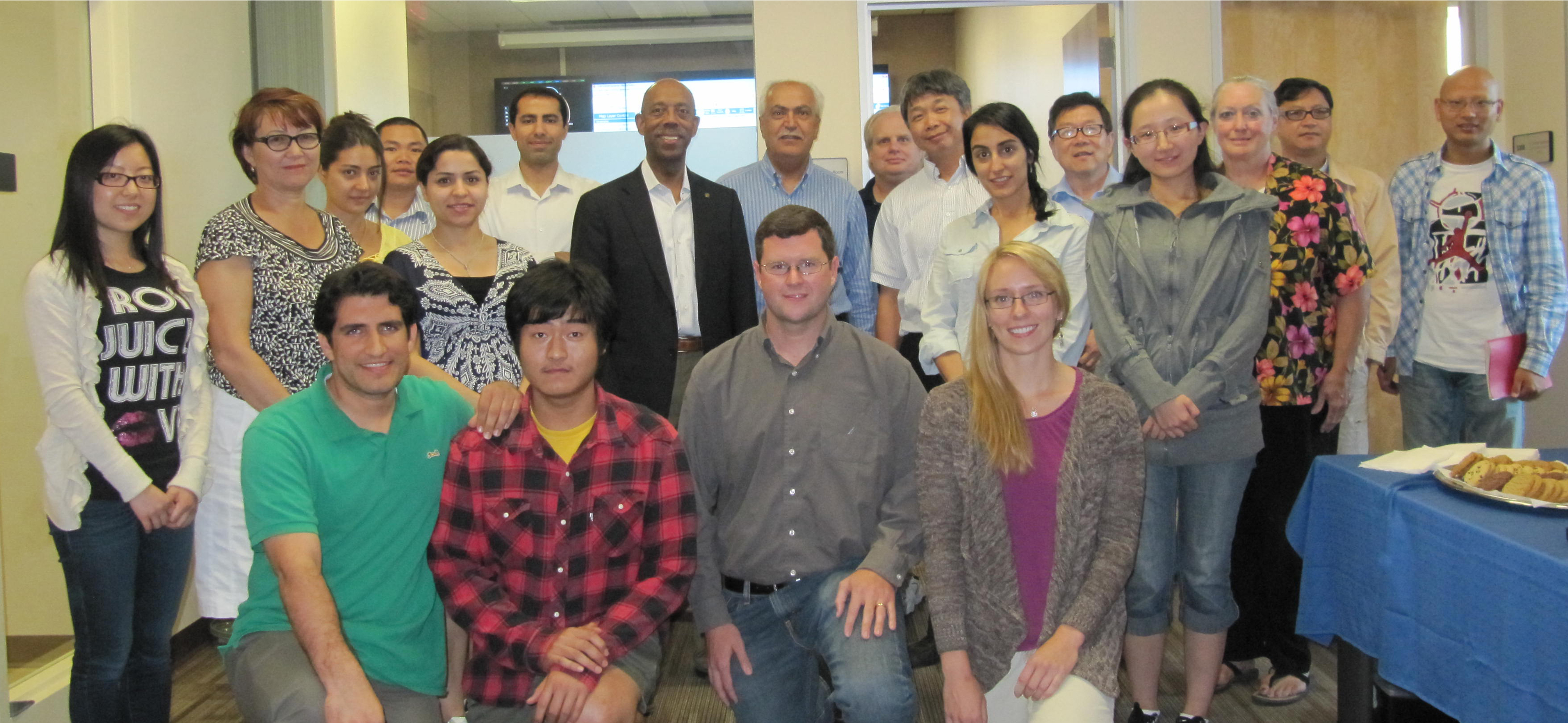
My years at CHRS were among the most formative of my scientific career. I worked on projects ranging from satellite-based precipitation estimation to early machine-learning models for rainfall and hydrologic forecasting and water system modeling projects. This deeply influenced the AI-driven hydrology my group pursues today.
What truly stood out was the CHRS center’s supportive and student-centered atmosphere. Professor Sorooshian and the entire team created an environment where students were encouraged to explore bold ideas and take ownership of their research. Early in my Ph.D., I expressed to Professor Sorooshian my desire to work on water resources systems, specifically reservoir and hydropower optimization for California’s State Water Project. He was incredibly encouraging and gave me full freedom to pursue this topic, even though it extended beyond traditional hydrometeorology.
That work later contributed to the U.S.-China Clean Energy Research Center (CERC-WET) consortium led by UC Berkeley and UC Irvine, giving me firsthand experience collaborating with operational agencies, academic partners and industry groups on sustainable water-energy systems.
Looking back, CHRS was not just a research center. It was a community and family that shaped my career, my scientific values and the kind of mentor I aspire to be.
Tell us about your work at the University of Oklahoma, School of Civil Engineering and Environmental Science.
I joined the University of Oklahoma as a core faculty member of the Online Hydrology and Water Security program where I helped develop curriculum, design and teach online courses, support student recruitment and maintain program operations. Being part of this innovative, interdisciplinary program made me feel very proud of the role I played in expanding hydrology education to students.
My research group focused on AI-driven hydrologic forecasting, climate-informed reservoir operation, sub seasonal-to-seasonal precipitation prediction and flood forecasting. My team collaborated closely with the National Oceanic and Atmospheric Administration — the U.S. Army Corps of Engineers — and the Bureau of Reclamation to develop machine-learning models that improve water and energy system decision-making. Watching OU’s graduate and undergraduate students grow into independent researchers and professionals was deeply fulfilling.
How does your research impact society?
The common thread across my research is understanding, predicting and preparing for hydrometeorological extremes. At UCI, I worked on projects related to satellite rainfall estimation, precipitation nowcasting and early AI and statistical models for hydrologic forecasting. The combination of remote sensing, atmospheric science and emerging AI-driven approaches that I learned at CHRS became the foundation of my later work.
At the University of Oklahoma, I expanded on this foundation significantly, particularly through an NSF CAREER project. In this work, my team used advanced AI, physics-informed algorithms and S2S climate forecasts to help reservoir operators anticipate extreme weather hazards, with lead times of weeks to months in advance. These tools enable proactive, flexible reservoir operation strategies that help prevent dam overtopping, water shortages and operational failures under nonstationary climate conditions.
In many ways, I am still building on the shoulders of giants. As climate change accelerates the frequency of extreme rainfall, flash floods and hydrologic uncertainty, these advances play an increasingly critical role in protecting communities and supporting sustainable water and energy systems.
How have you mentored students? What stands out to you?
I have had the privilege of mentoring more than two dozen postdocs, Ph.D. students, master’s students and undergraduates. What stands out most is the diversity of their backgrounds and career goals.
I see it as one of my core responsibilities to find or secure research projects that truly match each student’s interests, personality and skillsets. I personally went through several academic transitions, and I understand how challenging it can be if a student is assigned a topic they do not genuinely enjoy. In my experience, students are far more motivated, creative and successful when they are in the “driver’s seat” of a project that excites them. I still remember how energized I felt when Professor Sorooshian discussed my own Ph.D. project with me at UCI. That experience reinforced my belief that mentoring is not about forcing a student into a predetermined project – it is about listening and identifying their strengths and passions and helping them find a path where they can thrive.
Congratulations for receiving the Hydrological Sciences Early Career Award from the American Geophysical Union. What does it mean to you to be recognized?
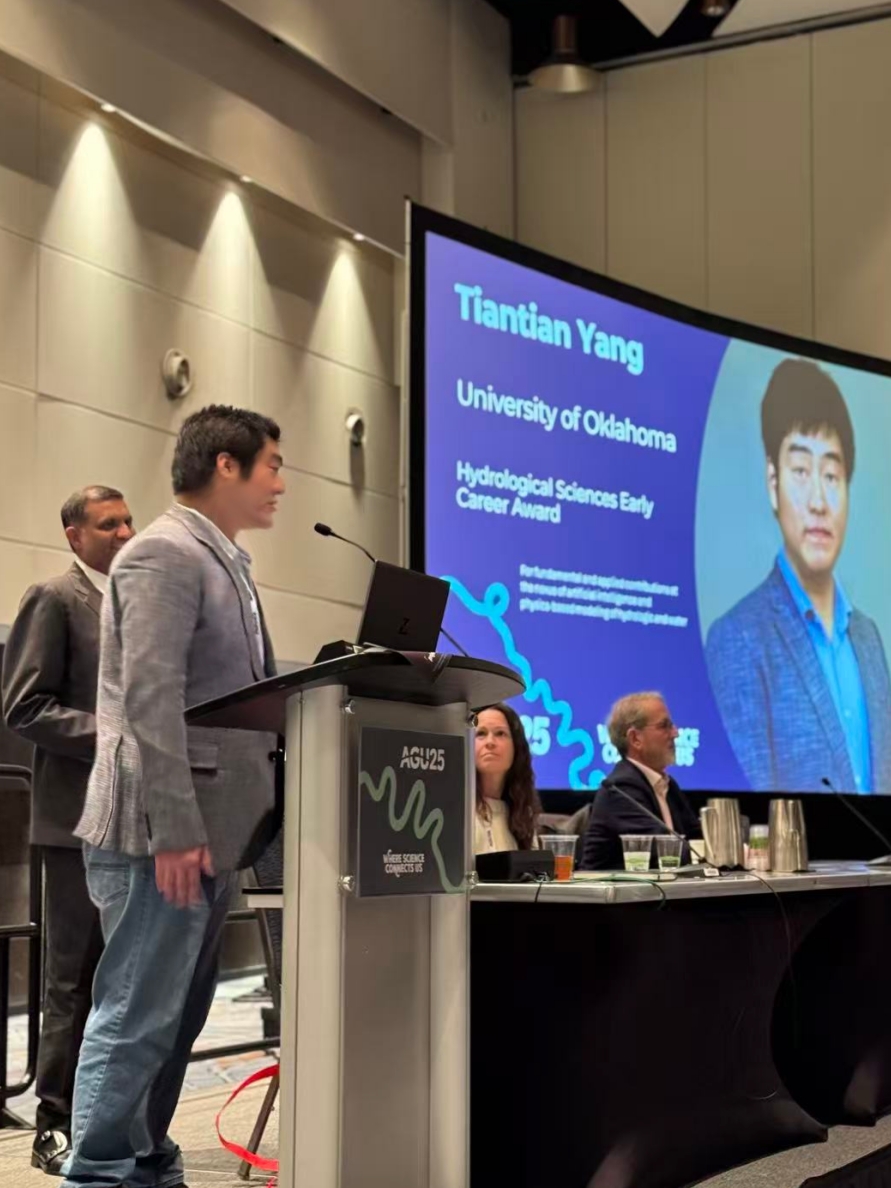
It is deeply meaningful. The AGU is one of the most respected scientific organizations in our field. To receive this recognition at this stage in my career is both humbling and motivating. It reflects not only my own efforts but also the hard work of my students, collaborators and mentors. I also feel that I have not disappointed the reputation and brand of UCI CEE and CHRS as an alumnus. I hope to continue contributing to the scientific community by developing transformative research and by educating the next generation of young scientists, students and engineers.
Any advice for engineering students today?
My advice to engineering students today is to build a strong foundation in engineering fundamentals while staying open to change and interdisciplinarity. The most impactful problems in my field do not sit neatly within one discipline. Finally, always seek mentors, connect with your peers and community, stay curious and do not be afraid to pivot when you discover what truly excites you. In fact, engineering is not just about solving problems but about choosing the problems that matter.
Anything else you would like to add?
I look forward to continuing collaborations with UCI faculty, students and alumni in research, teaching and outreach. My new contact is yangtt@umich.edu. Please do not hesitate to reach out if there are any opportunities to work together.
– Cassandra Nava
