
CBE 298 Seminar: Metal Electrodeposition for Modern Mineral Refining
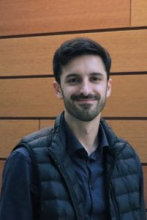
Interim Director, Oregon Center for Electrochemistry
Abstract: Electrochemical cells powered by clean electricity can reduce metals without concomitant carbon-dioxide emissions and can thus support decarbonized manufacturing processes, e.g. steelmaking. In this talk, I will summarize insights from our lab on the mechanism of aqueous electrodeposition and more complex depositions from alkaline suspensions of oxides. Au(111) surfaces enable site specific measurements of microscopically reversible ion transfer steps. In situ characterization of the environment produced while reducing iron oxide to elemental iron at rapid reaction rates reveals the important role of dissolved intermediates. An overall process for producing iron and commodity chemicals has been evaluated through prototypes and technoeconomic analysis. Together these results provide new pathways for zero-carbon-emission manufacturing of metals and materials.
Bio: Paul Kempler is an assistant professor of chemistry at the University of Oregon and the interim director for the Oregon Center for Electrochemistry. After completing his doctorate in chemical engineering studying solar water splitting cells with Professor Nate Lewis at Caltech, he moved to Oregon to help start an industry-focused master's program in electrochemistry. With the Oregon Center for Electrochemistry, he manages a network of industry partners and has placed over 100 students into careers working on electrochemical technologies. Current projects in the Kempler group include development of advanced alkaline water electrolysis, electrolyzers for low temperature ironmaking, and mechanistic studies on interfacial ion transfer.
Share

Related Content
| Attachment | Size |
|---|---|
| 779.46 KB |
Upcoming Events
-
CBE 298 Seminar: Coffee as a Platform for Experiential Chemical Engineering Education: From Qualitative Design to Quantitative Analysis
-
EECS Seminar: Printed Electronic Skin for Robots and Interactive Systems
-
MSE 298 Seminar: Illuminating Microstructure-Dependent Binding and Delivery of Nucleic Acids via Gradient Copolymerization and Field Flow Fractionation
-
MSE 298 Seminar: Illuminating Microstructure-Dependent Binding and Delivery of Nucleic Acids via Gradient Copolymerization and Field Flow Fractionation