
CBE 298 Seminar: Engineering Strategies for Structural Heart Disease
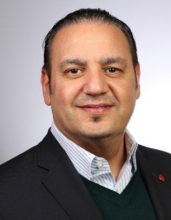
Abstract: Structural heart disease encompasses a broad spectrum of congenital and acquired abnormalities that alter cardiac structure and impair function. At the Kheradvar Lab, we address these challenges through an engineering-centered approach that integrates biomechanics, biomaterials, advanced imaging and minimally invasive device design to create new solutions for cardiovascular disease.
Our group has developed several new transcatheter and surgical heart valve platforms, including a fully repositionable IVUS-guided aortic valve, a modular atrioventricular system, a dynamic mitral valve and a growth-accommodating pulmonary valve for children. These form the foundation of our device development pipeline, but much of our current research is directed toward next-generation concepts that draw from material science and regenerative engineering.
A central example is the HValve, a hybrid tissue-engineered heart valve that combines a polymeric scaffold with biological tissue. This technology is still in active development and in the animal study stage. Our current focus is on refining scaffold chemistry, porosity and mechanical behavior to support durability while enabling more physiologic motion. We continue to study how polymer architecture influences tissue remodeling and long-term behavior, recognizing that this hybrid platform is evolving as we deepen our understanding of engineered material-tissue interactions.
We have also advanced mitochondrial transplantation, a strategy designed to improve myocardial energetics by delivering viable mitochondria to injured cardiac cells. Our group has successfully demonstrated the feasibility and functional benefits of this approach at cellular level, remaining at the translational research stage. Ongoing work aims to optimize delivery methods, and to further elucidate the mechanisms governing mitochondrial uptake and integration.
In this presentation, I will provide an overview of these efforts – ranging from device innovation and hybrid tissue engineered heart valve to bioenergetic strategies and advanced imaging – and discuss how our multidisciplinary approach aims to shape the future of treatment for structural heart disease.
Bio: Dr. Arash Kheradvar is a professor of radiological sciences, biomedical engineering and medicine at UC Irvine. He is a cardiovascular scientist and engineer with a broad background in cardiovascular engineering, heart valves, cardiac imaging and biomechanics. Kheradvar earned his M.D. from Tehran University of Medical Sciences in 2000 and his Ph.D. in bioengineering from Caltech in 2006. With over 20 years of experience in cardiovascular science and technology, his work has been driven by a deep commitment to addressing unmet patient needs, particularly in the areas of structural heart diseases and cardiovascular imaging. His lab has been continuously funded by grants from NSF, NIH, AHA, industry and many private foundations.
Kheradvar has published over 80 peer-reviewed journal articles, authored 2 books, and is the lead inventor of more than 50 issued U.S. and international patents, with several others pending. Dr. Kheradvar has been involved in developing a pipeline of promising technologies, guiding them from the conceptual stage to clinical development, with a focus on addressing important medical needs. His work is driven by a genuine desire to improve patient care and advance the field of cardiovascular medicine. Kheradvar is a fellow of the American Heart Association, the American Institute of Medical and Biological Engineering (AIMBE) and American Society of Echocardiography.
Share

Related Content
| Attachment | Size |
|---|---|
| 925.41 KB |
Upcoming Events
-
CBE 298 Seminar: Coffee as a Platform for Experiential Chemical Engineering Education: From Qualitative Design to Quantitative Analysis
-
EECS Seminar: Printed Electronic Skin for Robots and Interactive Systems
-
MSE 298 Seminar: Illuminating Microstructure-Dependent Binding and Delivery of Nucleic Acids via Gradient Copolymerization and Field Flow Fractionation
-
MSE 298 Seminar: Illuminating Microstructure-Dependent Binding and Delivery of Nucleic Acids via Gradient Copolymerization and Field Flow Fractionation