
EECS Seminar: Toward Energy-Efficient Foundation Models - Reimagining Digital Twin Solutions for Real-Time Sensing in Inaccessible Locations
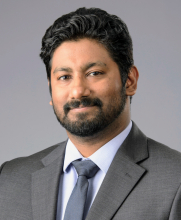
Assistant Professor, Nuclear, Plasma, and Radiological Engineering
Assistant Professor, National Center for Supercomputing Applications
University of Illinois Urbana-Champaign
Abstract: Foundation models (FMs) offer a transformative approach to digital twins (DTs) in energy systems by enabling generalizable, compact and energy-efficient AI that addresses the brittleness of conventional task-specific models. Current DTs often fail under sparse sensing, require costly retraining and rely on power-hungry infrastructure, limiting their effectiveness in dynamic or constrained environments. This talk presents FM-enabled DTs enhanced with agentic AI for real-time field reconstruction, uncertainty quantification and autonomous decision-making. Alam’s group develops neural-operator-based twins optimized for physical systems, capable of operating with millisecond latency, and can potentially be deployed on edge devices. Agentic components enable these twins to sense, reason and act within context, forming a continuous loop between data, interpretation and control. This work supports DOE missions in clean energy, nuclear safety and secure infrastructure by advancing digital twins from passive replicas to intelligent, resilient and energy-aware systems ready for real-world scientific and operational deployment.
Bio: Syed Bahauddin Alam is an assistant professor in nuclear, plasma and radiological engineering at the University of Illinois Urbana–Champaign with a joint appointment at the National Center for Supercomputing Applications. He is the recipient of the U.S. DOE Distinguished Early Career Award 2025 and NSF CAREER Award 2026. He is one of 11 nationally appointed members to the National Academies of Sciences, Engineering, and Medicine (NASEM) committee on Foundation Models for Scientific Discovery, contributing formal recommendations to the U.S. DOE. He was named as the National AI Leader in the University of Illinois's official response to the White House AI Action Plan. He is the recipient of the 2025 HPCwire Editors' Choice Award in Energy, which honors the most significant breakthroughs and the best and brightest minds in supercomputing worldwide. He was selected as one of 100 global leaders by the Simons Foundation to advance foundation models and was named to the American Nuclear Society 40 Under. He has served as an Invited Speaker at the National Academies and the U.S. DOE on AI and Foundation Models. He received his Ph.D and M.Phil from Cambridge University and a bachelor's degree in EEE from Bangladesh University of Engineering and Technology.
Share

Upcoming Events
-
CBE 298 Seminar: Coffee as a Platform for Experiential Chemical Engineering Education: From Qualitative Design to Quantitative Analysis
-
EECS Seminar: Printed Electronic Skin for Robots and Interactive Systems
-
MSE 298 Seminar: Illuminating Microstructure-Dependent Binding and Delivery of Nucleic Acids via Gradient Copolymerization and Field Flow Fractionation
-
MSE 298 Seminar: Illuminating Microstructure-Dependent Binding and Delivery of Nucleic Acids via Gradient Copolymerization and Field Flow Fractionation