
EECS Seminar: Evaluating Generative AI in Healthcare

Professor
Computational Precision Health (CPH) program
Division of Computer at EECS
Department of Statistics
UC Berkeley and UCSF
Abstract: Over the past few years, generative AI models have been widely deployed across health systems to perform a range of tasks, from clinical documentation to evidence synthesis and decision support. Yet these models perform fundamentally open-ended tasks that cannot be automatically verified, hence they require costly human evaluation for every new model and use case. In this talk, I will provide an overview of the evolution of thinking about AI evaluation in health care and outline the central challenges posed by current generative AI models. I will then present concrete examples of generative AI currently deployed across the UC health systems, along with our ongoing efforts to evaluate these tools in practice. Finally, I will provide a perspective on AI evaluation grounded in the theory of measurement validity from the social sciences, and share early results from our work designing valid benchmark datasets for generative AI.
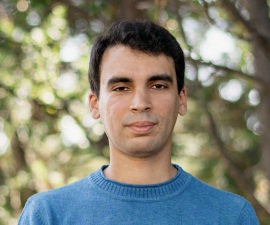
Bio: Ahmed Alaa is an assistant professor of computational precision health at the University of California, Berkeley and the University of California, San Francisco. His research focuses on developing machine learning (ML) methods to solve real-world problems in precision medicine. The overarching goal of his research is to develop ML models that can identify the best treatment for each individual patient based on their clinical features and characteristics. To this end, his lab focuses on developing multimodal deep learning models to learn representations of patient data across different modalities, and developing rigorous statistical inference procedures that ensure that these models make valid predictions about patient outcomes.
Share

Related Content
| Attachment | Size |
|---|---|
| 24.84 KB |
Upcoming Events
-
CBE 298 Seminar: Coffee as a Platform for Experiential Chemical Engineering Education: From Qualitative Design to Quantitative Analysis
-
EECS Seminar: Printed Electronic Skin for Robots and Interactive Systems
-
MSE 298 Seminar: Illuminating Microstructure-Dependent Binding and Delivery of Nucleic Acids via Gradient Copolymerization and Field Flow Fractionation
-
MSE 298 Seminar: Illuminating Microstructure-Dependent Binding and Delivery of Nucleic Acids via Gradient Copolymerization and Field Flow Fractionation