
W. M. Keck Foundation Gives $1.2 Million to UC Irvine to Support Early-Career Scientists
Six teams awarded bridge funding to sustain innovation amid federal funding uncertainty
May 14, 2026 — A $1.2 million grant from the W. M. Keck Foundation to the University of California, Irvine is part of a special initiative to support early-career scientists facing uncertainty in federal research funding.
In response to these widespread federal reductions, the Keck Foundation launched a one-time bridge funding initiative that increased its annual investment in basic research by more than 50 percent.
The Bridge Funding Initiative is part of a broader effort by the Keck Foundation to support early-career investigators and maintain momentum in the research pipeline. By investing in faculty–student partnerships, the program aims to help ensure continuity in scientific discovery and training. Through its Keck Scholar-Fellow Bridge Initiative, it has awarded two-year grants to 75 faculty-member and Ph.D.-student pairs across California to help sustain critical research and training.
Six UC Irvine research teams were selected for funding, underscoring the university’s strength in advancing innovative, high-impact science.
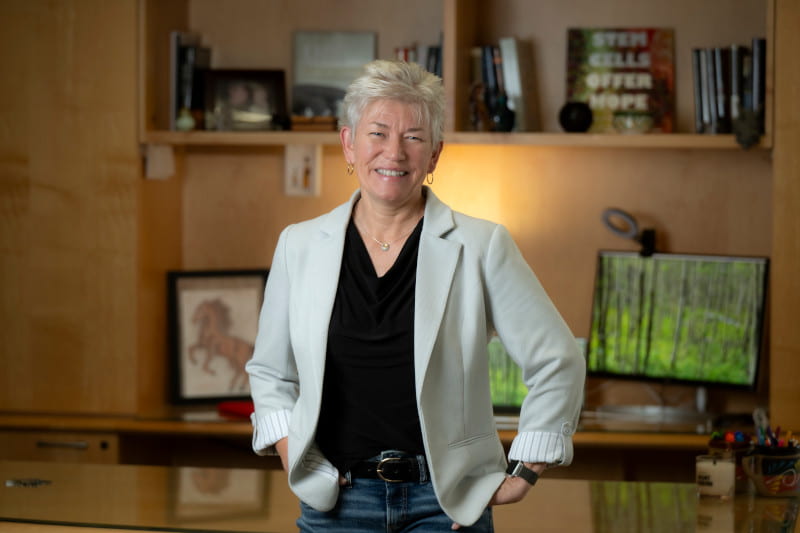
“This investment comes at a pivotal moment for the research community,” said Aileen Anderson, vice chancellor for research at UC Irvine. “By supporting early-career scientists and their students, the Keck Foundation is helping preserve the continuity of discovery and ensuring that promising ideas and talent are not lost during a period of funding uncertainty. These awards not only sustain critical research today but also strengthen the pipeline of innovation for the future.”
Advancing discovery across disciplines
The funded projects span a wide range of fields, from ocean ecosystems to quantum physics and cancer research:
- Tim Downing, associate professor of biomedical engineering, and Kehan Ren, Ph.D. student in biomedical engineering, in the Samueli School of Engineering. Downing and Ren examine how DNA replication timing, controlled by the protein RIF1, influences a cell’s ability to change identity, with implications for cancer and regenerative medicine.
- Katherine Mackey, professor of Earth system science, and Kathryn Pelon, Ph.D. student in Earth system science, in the School of Physical Sciences. Mackey and Pelon study why closely related marine microorganisms coexist rather than compete, including whether they share essential resources. Their work will improve predictions of how ocean food webs respond to climate change.
- Shirley Li, assistant professor of physics and astronomy, and Andrew Evans, Ph.D. student in physics, in the School of Physical Sciences. Li and Evans are developing quantum sensing techniques to directly measure neutrino mass, which may reveal new approaches to understanding the nature of these mysterious particles beyond the current model.
- Shivashankar Othy, assistant professor of physiology & biophysics, and Angel Zavala, Ph.D. student in physiology & biophysics, in the School of Medicine. Othy and Zavala study how the force-sensing protein Piezo1 regulates T cells, with findings suggesting it acts as a brake on tumor-fighting activity and could become the basis of new cancer immunotherapies.
- Maria Rebolleda-Gómez, assistant professor of ecology and evolutionary biology, and Ariel Favier, Ph.D. student in ecology and evolutionary biology, in the Charlie Dunlop School of Biological Sciences. Rebolleda-Gómez and Favier explore how a microbial diet affects bacteria’s ability to adapt to rising temperatures, which is relevant to climate change and food safety.
- Darci Trader, associate professor of pharmaceutical sciences, and Shawn Vinogradsky, Ph.D. student in pharmaceutical sciences, in the School of Pharmacy & Pharmaceutical Sciences. Trader and Vinogradsky study how the protein Rpn-13 regulates protein recycling and may also influence gene expression, advancing understanding of core cellular processes.
By supporting these projects, the Keck Foundation aims to preserve momentum in scientific discovery and ensure continuity in the research pipeline that drives innovation in the United States.
- Tom Vasich
