
CBE 298 Seminar: Do I Belong Here? Addressing Imposter Syndrome in Graduate School
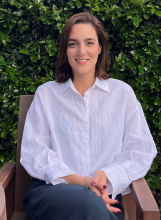
Licensed Clinical Psychologist, Senior Staff Psychologist
UCI Counseling Center
Abstract: Graduate school can be an exciting yet challenging experience, often accompanied by feelings of self-doubt, inadequacy, and the fear of not belonging. Many high-achieving students experience imposter syndrome, struggling to internalize their accomplishments and questioning whether they truly deserve their success.
This interactive seminar will explore the signs and underlying causes of imposter syndrome, including the influence of family expectations, academic environments, cultural backgrounds, and societal pressures. Particular attention will be given to the experiences of first-generation students and those navigating multiple cultural identities. Participants will learn practical strategies to challenge negative thought patterns, recognize their strengths, practice self-compassion, and build supportive connections. Through reflection and discussion, students will gain tools to navigate self-doubt, develop greater confidence, and foster a stronger sense of belonging throughout their graduate school journey.
Bio: Dr. Shuka Jahromifar is a Senior Staff Psychologist at the UCI Counseling Center. She earned her bachelor’s degree in Psychology from the University of California, Santa Barbara, and her Doctor of Psychology (PsyD) in Clinical Psychology from the California School of Professional Psychology. Prior to joining the UCI Counseling Center four years ago, she spent seven years working in community mental health, providing care to underserved populations experiencing chronic and severe mental illness.
Dr. Jahromifar believes in tailoring her therapeutic approach to each individual’s unique needs and emphasizes a collaborative, compassionate, and nonjudgmental therapeutic relationship. She strives to create a safe and supportive space where students feel comfortable exploring their experiences, gaining insight into their challenges, and developing a deeper understanding of themselves.
Her approach integrates psychodynamic and psychoanalytic, humanistic, and cognitive behavioral therapies to help students understand how their life experiences and relationships influence their emotions, thoughts, and behavioral patterns. She is passionate about helping students recognize and build upon their strengths, enhance their self-esteem, and identify and break unhealthy patterns that may be affecting their current well-being. Through this process, she aims to empower students to develop greater self-awareness, foster personal growth, and create meaningful, lasting change.
Share

Related Content
| Attachment | Size |
|---|---|
| 679.93 KB |
Upcoming Events
-
EECS Seminar: Printed Electronic Skin for Robots and Interactive Systems
-
MAE 298 Seminar:Ellipse Synthesis and the Computational Design of Robot Geometries
-
CBE 298 Seminar: Do I Belong Here? Addressing Imposter Syndrome in Graduate School
-
CEE Ph.D. Defense Announcement: Detection and Monitoring of Viruses in Water for Public Health & Environmental Engineering Applications
-
MSE 298 Seminar: Challenges and Opportunities Using AI to Accelerate Materials Discovery and Process Optimization