
CBE 298 Seminar: Coffee as a Platform for Experiential Chemical Engineering Education: From Qualitative Design to Quantitative Analysis
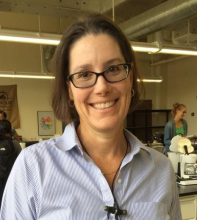
Professor and Chair of Chemical Engineering
UC Davis
Abstract: At the University of California, Davis, coffee provides an accessible and engaging platform for introducing students to chemical engineering analysis and design. Two complementary first-year courses—ECH 1, The Design of Coffee, and ECH 5, Introduction to Analysis and Design in Chemical Engineering—connect familiar sensory experiences with foundational engineering principles. ECH 1 offers a non-mathematical introduction to how chemical engineers think. Through lectures and hands-on laboratory experiments involving coffee roasting and brewing, students explore mass and energy balances, chemical reactions, heat and mass transfer, fluid flow, water chemistry, colloidal phenomena, filtration, and engineering economics. ECH 5 builds upon this conceptual foundation through a quantitative treatment of engineering analysis and design, incorporating differential and integral calculus into laboratory investigations of coffee processes. Both courses culminate in an engineering design competition in which student teams optimize coffee quality while minimizing electrical energy required to roast and brew the coffee, integrating technical performance, sensory evaluation, and practical design constraints. Together, ECH 1 and ECH 5 establish a scaffolded pathway from qualitative reasoning to quantitative problem-solving while demonstrating the relevance of chemical engineering to an everyday product. Collectively with the related ECH 1Y offering, these courses enrolled more than 2,500 students in both 2024 and 2025, illustrating the scalability and broad appeal of coffee-centered experiential education.
Bio: Tonya Kuhl, is Professor and Chair of Chemical Engineering, the co-Director of the UC Davis Coffee Center (and co-instructor and developer of ECH 1 “The Design of Coffee” taken by over 2,500 UC Davis students each year), and a faculty member of the Biophysics and Biomedical Engineering Graduate Groups. Her Bachelors was from the University of Arizona and Ph.D. from UCSB, both in chemical engineering. Her research interests are in the general area of colloidal science, self-assembly, and complex fluids. In particular, the Kuhl group studies a wide range of systems from surfactants, lipids and proteins to polymer coatings, nanoparticles and confined fluids. The common theme is that “interfaces are where stuff happens”. Her group studies interfaces by directly measuring the normal interactions (attractive and repulsive) between surfaces and their lateral friction using specialized high resolution force spectroscopy. Complementary x-ray and neutron scattering measurements are used to measure the exact film structure on a molecular level, enabling a fundamental understanding of how surface film structure and experimental conditions yield the measured properties. Rather than more empirical, “guess and test”, approaches for improvement in properties or functionality – the Kuhl group uses direct measurements and theory to enable predictive modeling and rational design. Currently, her research is primarily focused on the biophysics of cellular membranes, polymer adhesion, protein crystallography, and development of novel biosensors.
Share

Related Content
| Attachment | Size |
|---|---|
| 773.25 KB |
Upcoming Events
-
CBE 298 Seminar: Coffee as a Platform for Experiential Chemical Engineering Education: From Qualitative Design to Quantitative Analysis
-
MSE 298 Seminar: Illuminating Microstructure-Dependent Binding and Delivery of Nucleic Acids via Gradient Copolymerization and Field Flow Fractionation
-
MSE 298 Seminar: Illuminating Microstructure-Dependent Binding and Delivery of Nucleic Acids via Gradient Copolymerization and Field Flow Fractionation